slogt v2
Back in 2023 I wrote about slogt, a tiny
package that bridges Go’s slog and the stdlib
testing package, so that structured log output shows up
neatly correlated with the test that produced it.
It always had one deficiency. The only output sink testing.T offered was t.Log(string) —
a function, not an io.Writer. So slogt had to format each record itself and hand the
finished string to t.Log, which meant the source location that testing prepended pointed
at slogt’s own internals rather than at the line that actually called the logger. I noted the
limitation in the README:
Alas, given the available functionality on
testing.T(i.e. theHelpermethod), and howslogis implemented, there’s no way to have the correct callsite printed.
A few weeks later, in May 2023, earthboundkid filed a Go proposal, quoting that very line, and arguing that the fix had to come from the Go side:
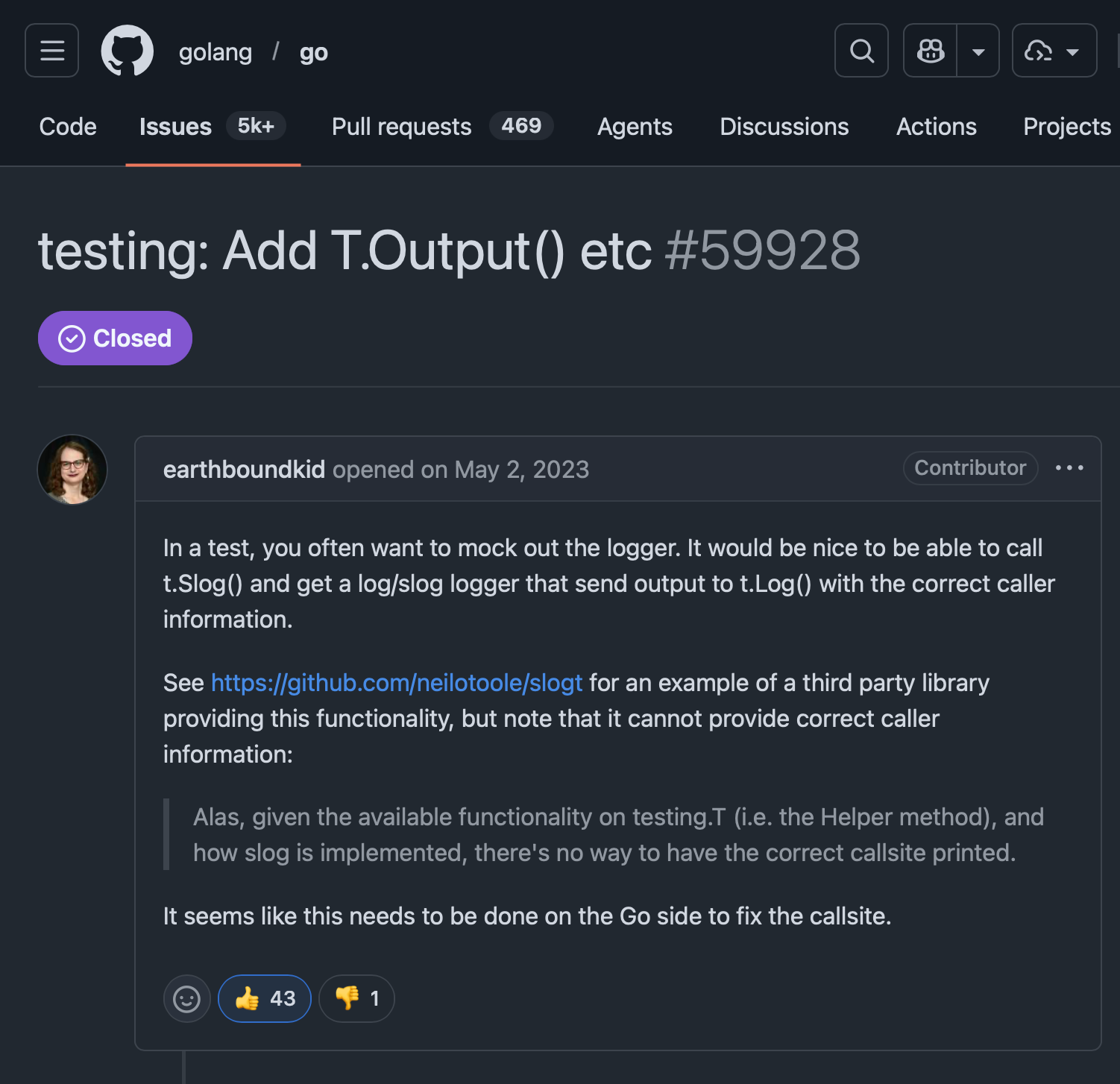
The proposal was accepted, and Go 1.25 shipped
testing.TB.Output(): an io.Writer that writes to the
test log without prepending a source location. That’s precisely the hook slogt had always
been missing.
So, slogt v2 now routes its output through
testing.TB.Output(). The bogus callsite is gone, and you can finally turn on
AddSource: true and get the real one:
f := slogt.Factory(func(w io.Writer) slog.Handler {
	return slog.NewTextHandler(w, &slog.HandlerOptions{AddSource: true})
})
log := slogt.New(t, f)
v2 is a breaking change: it requires Go 1.25, the import path is now
github.com/neilotoole/slogt/v2, the old exported Bridge type is gone, and the mutable
Default variable has been replaced by SetDefault().
Three years and a stdlib change later, slogt is now complete.